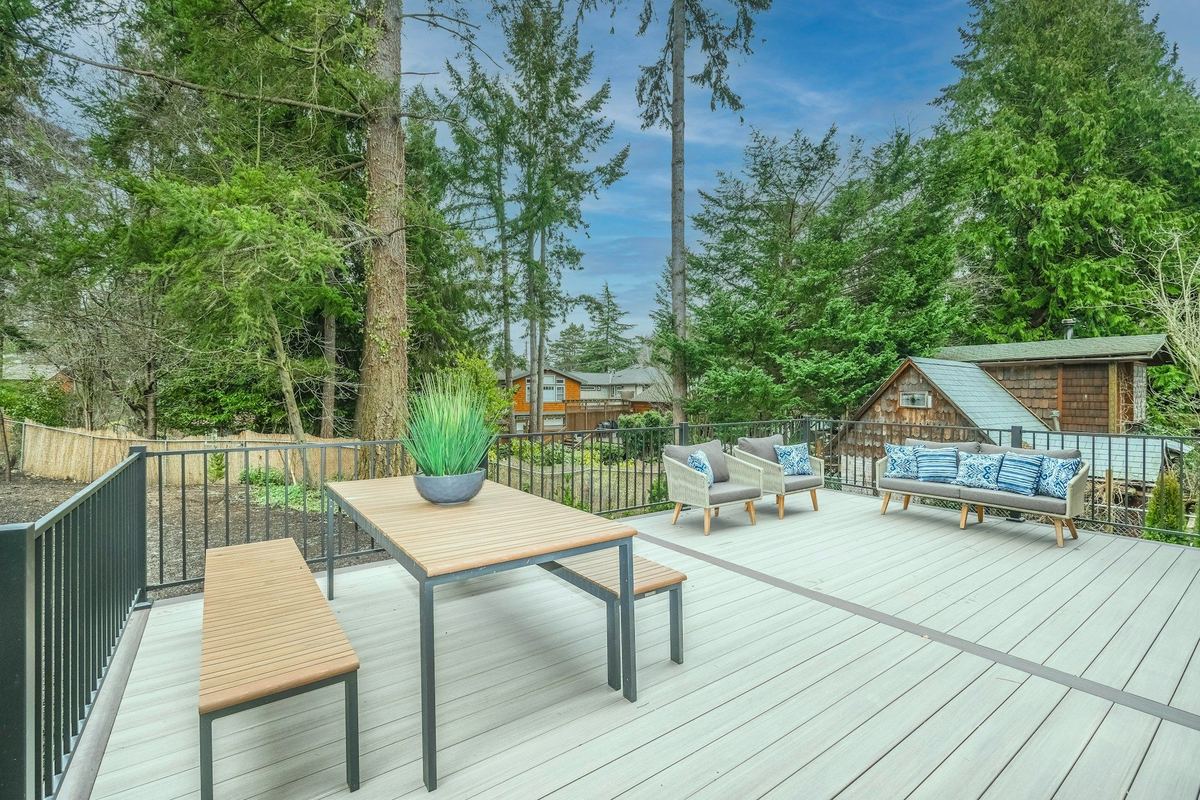
In short: treated wood is the most affordable, larch is a beautiful natural wood that lasts well, and composite needs the least care but costs the most. What matters most, though, is what you can't see: a proper substructure.
Treated wood
- The most affordable option.
- Treatment protects the wood from rot.
- Boards are greenish or brownish at first.
- Needs oiling, otherwise it turns grey and may crack.
Larch
- Dense, resinous wood that naturally resists moisture well.
- A warm colour. Without oil it turns silver-grey over time, which many people like.
- More expensive than treated wood.
- Boards may release some resin at first.
Composite
- Boards made of wood flour and plastic that don't need oiling.
- Don't crack or splinter.
- The most expensive option.
- Dark boards get hot in the sun.
The substructure matters more than the boards
Even the best board won't last on the wrong base. A deck needs a solid foundation, such as screw piles or concrete posts, and strong joists. Gaps are left between boards so water drains and air moves. Water must not collect under the deck.
Frequently asked questions
How often does a wooden deck need oiling?
Usually once a year or every two years, in spring when the wood is dry.
Do I need a building permit for a deck?
A typical low deck next to a house usually doesn't, but if it's high or has a roof, check with your municipality. Read more: when do you need a permit?
When is the best time to build a deck?
From spring to autumn, when the ground isn't frozen. In spring, book early as demand is high.
Planning a new deck? See our deck building service or ask for a free quote.