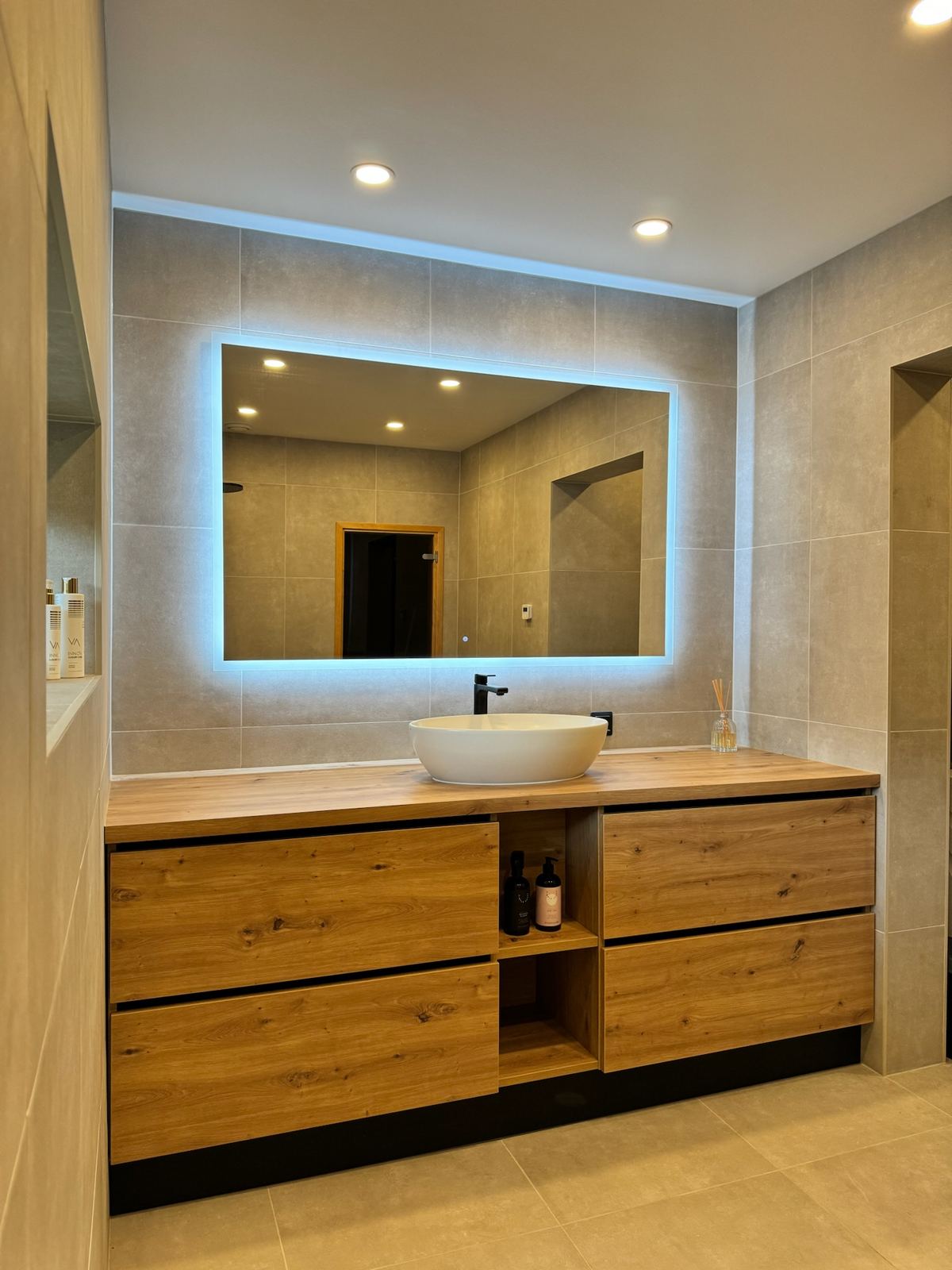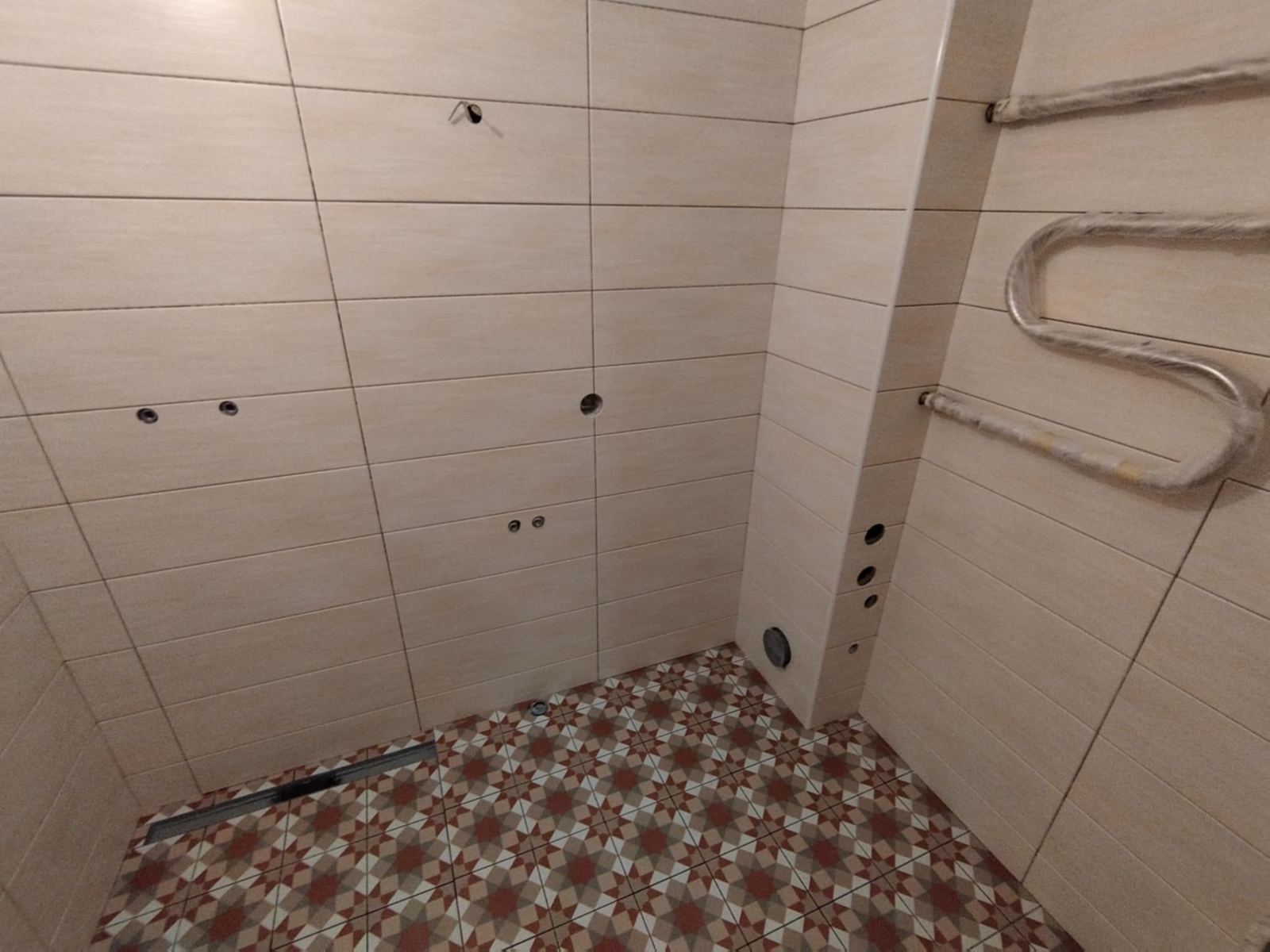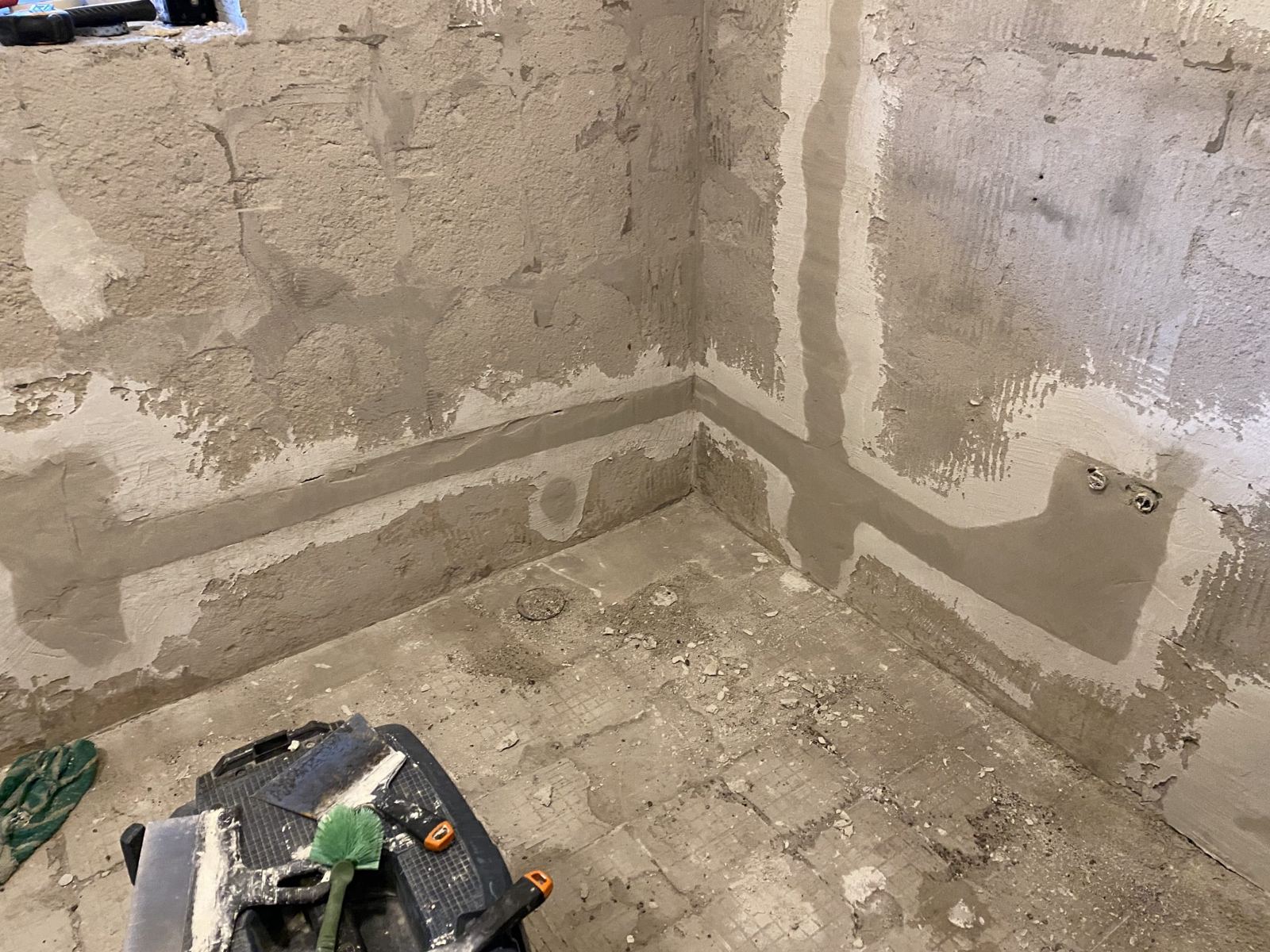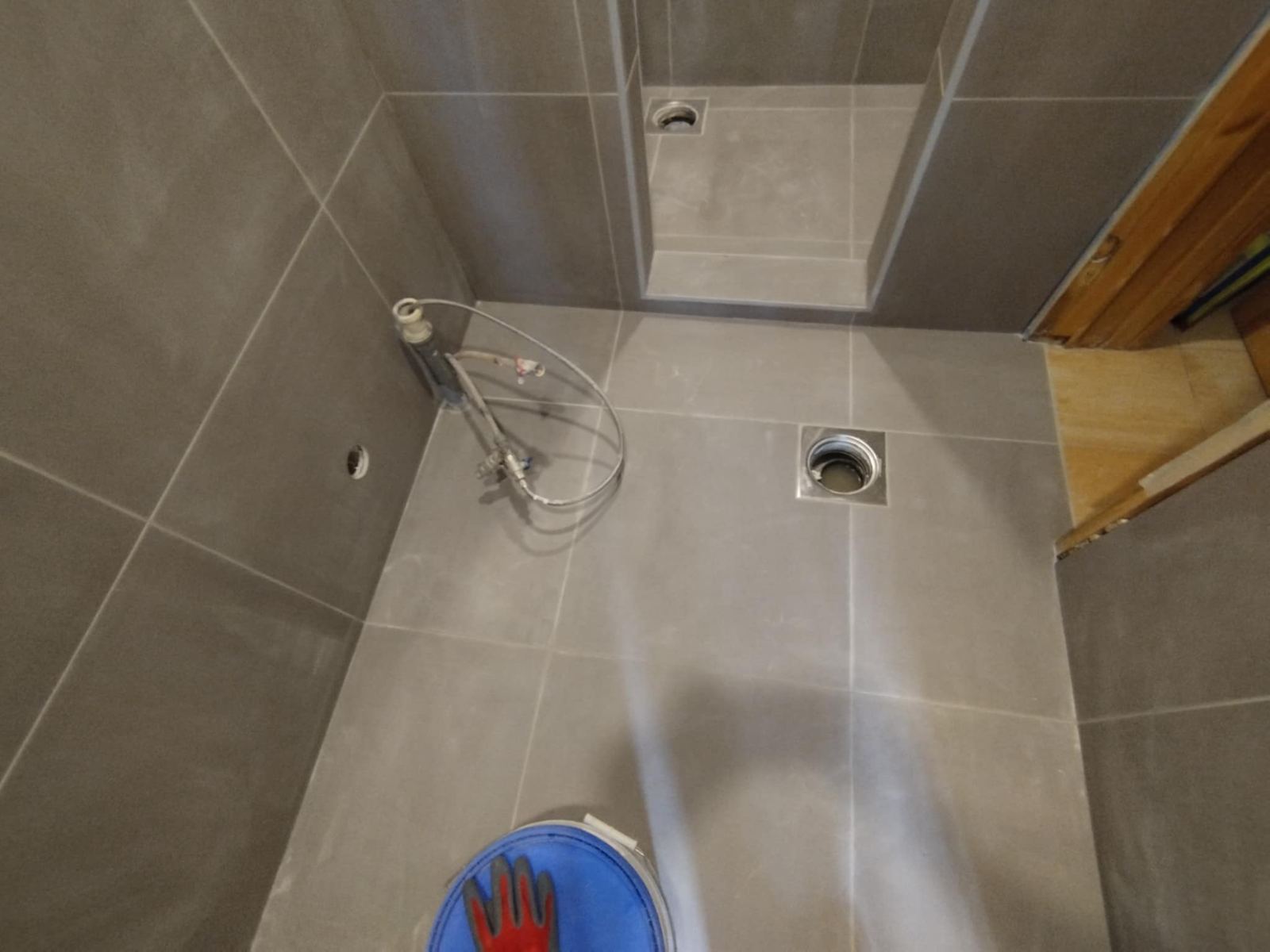
In short: Waterproofing is the layer under the tiles that stops water soaking into walls and floor. It covers the whole floor and the walls, higher around the shower. You can't see it in a finished bathroom, but it's what prevents water damage and mould.
When a bathroom renovation is finished, the owner sees tiles, taps and a basin. The most important layer, though, is hidden beneath them. Waterproofing keeps water from seeping into the walls and floor – and if it's done wrong, you usually only find out years later.
Why aren't tiles enough?
Many people think tiles and grout are waterproof. In fact, water seeps through the grout over time. Without a continuous waterproofing layer under the tiles, moisture reaches the walls, the floor and, in the worst case, the ceiling of the neighbour below.
Where does waterproofing go?
- The whole floor – covered completely.
- Walls – a little way up, and much higher around the shower.
- Corners and joints – special tapes are used here, as corners are where cracks form most easily.
- Pipe and drain penetrations – sealed separately, as these are typical leak points.
How is it done?
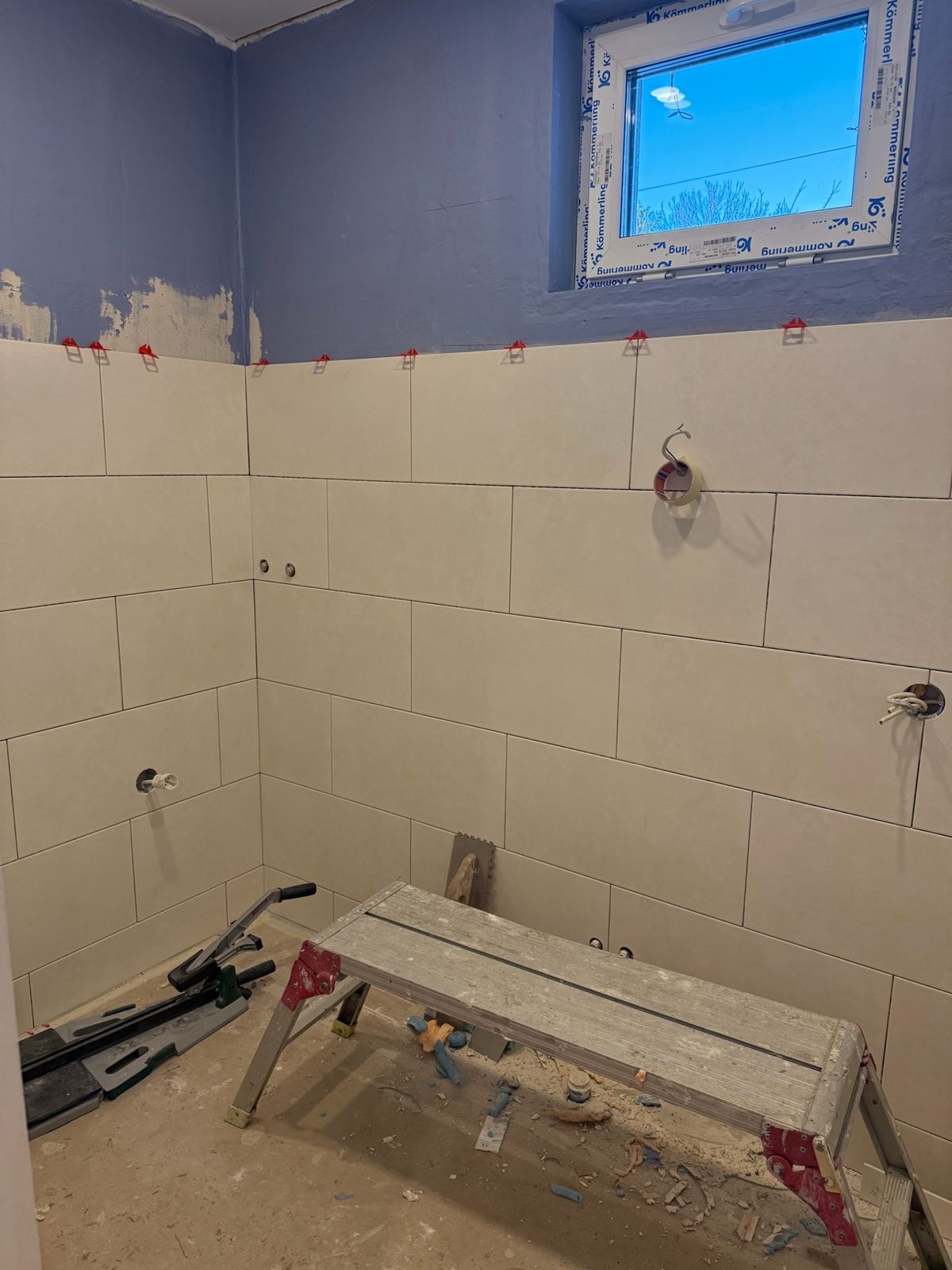
First the old tiles are removed and the substrate is cleaned and levelled. Then comes priming, corner tapes, penetration seals and finally the waterproofing layers. It's important to follow one manufacturer's system and let the layers dry properly. Before tiling, the layer should be checked to make sure it's intact and thick enough.
What to ask your contractor
- Which waterproofing system do you use?
- How high up the walls does it go, especially at the shower?
- How do you seal the drain and pipe penetrations?
- Does the same team do the waterproofing and the tiling?
The last question matters more than it seems: if one company waterproofs and another tiles, it's hard to say who's responsible when something goes wrong.
Over old tiles?
Generally not. Proper waterproofing needs a clean, solid substrate, so the old tiles must come off first. Read more about our waterproofing service.
Frequently asked questions
Aren't tiles and grout waterproof?
No. Water gets through the grout over time. That's why a continuous waterproofing layer is needed under the tiles.
How long does waterproofing take?
Usually 2–3 days, as each layer must dry before the next. Read more: how long a bathroom renovation takes.
How can I tell the waterproofing is damaged?
Signs are loose tiles, mould that keeps coming back, a damp wall or a stain on the downstairs neighbour's ceiling. See also what to do about mould in the bathroom.
Planning a bathroom renovation? Ask us for a free quote – we'll visit, look at the room and suggest a solution. Read more about our bathroom renovation service.